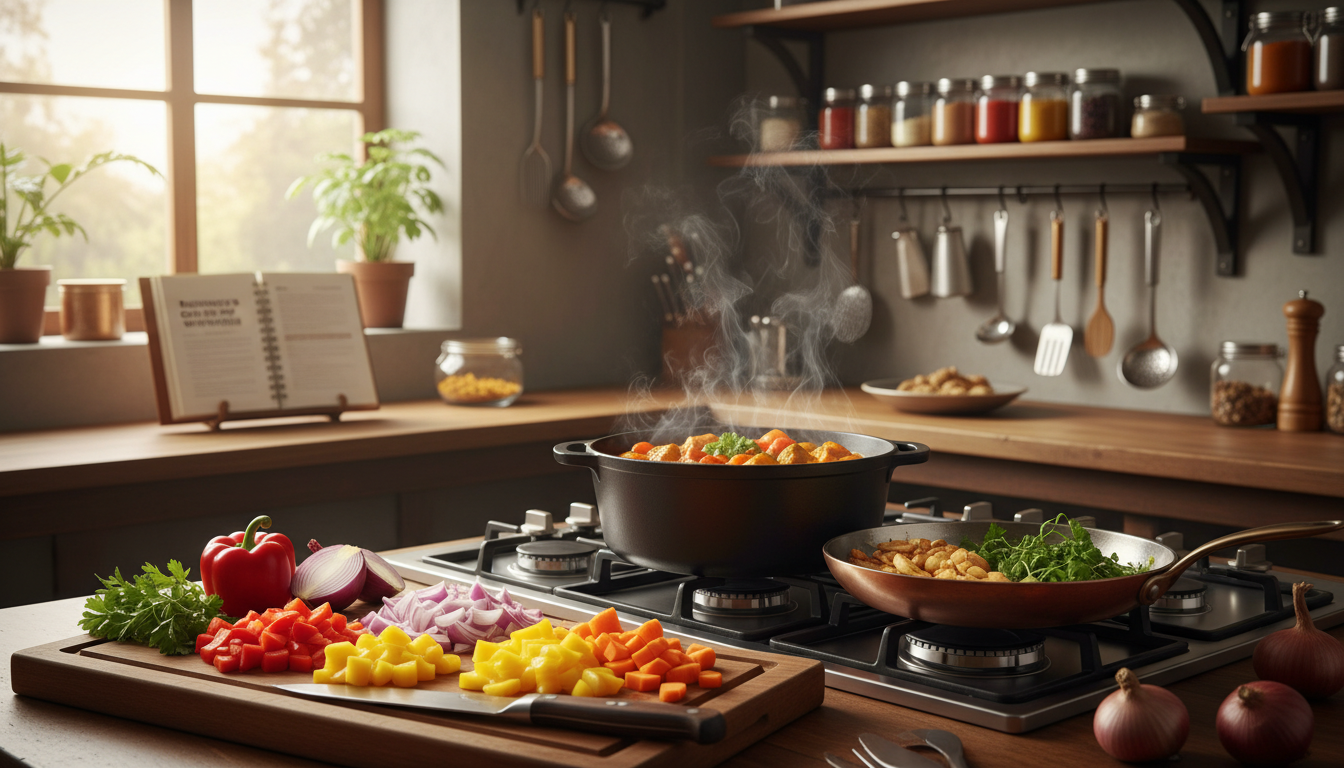
Essential Kitchen Tools for quick cooking start with the basics that every home cook needs. Getting the right tools doesn’t mean buying everything at once – you can build your collection gradually.
Smart cooks focus on versatile tools that handle multiple tasks. This approach saves money and counter space while making cooking more efficient.
TL;DR
- A sharp chef’s knife and sturdy cutting board form the foundation of any kitchen
- Multi-cookers like Instant Pots replace several appliances and save cooking time
- Quality measuring tools ensure consistent results in every dish you make
- Storage containers keep ingredients fresh and your kitchen organized
Top Picks


* As an Amazon Associate I earn from qualifying purchases at no extra cost to you.
Essential Kitchen Tools Every Cook Needs
Building your kitchen toolkit starts with tools that perform multiple functions. These essentials handle 80% of cooking tasks without cluttering your drawers.
Cutting and Prep Tools
A quality chef’s knife tops the list of must-have tools. An 8-inch blade handles most chopping, slicing, and mincing tasks with ease.
Pair your knife with a solid cutting board made from wood or plastic. Wood boards are gentler on knife edges while plastic boards resist bacteria and clean easily.
- Chef’s knife – 8-inch blade for versatility
- Paring knife – for detailed work and small fruits
- Cutting board – at least 12×18 inches for workspace
- Vegetable peeler – sharp and comfortable to hold
Measuring Tools
Accurate measurements make the difference between good food and great food. Invest in both dry and liquid measuring tools for best results.
- Dry measuring cups – nested set from 1/4 cup to 1 cup
- Liquid measuring cup – 2-cup capacity with clear markings
- Measuring spoons – set from 1/4 teaspoon to 1 tablespoon
- Kitchen scale – digital scale for precise baking measurements
Cookware That Handles Everything
The right pots and pans eliminate the need for specialty cookware in most home kitchens. Focus on pieces that work for multiple cooking methods.
Essential Pots and Pans
A non-stick skillet handles eggs, pancakes, and delicate proteins without sticking. Choose one with an oven-safe handle for versatility.
Medium saucepans work perfectly for pasta, rice, and small-batch cooking. Dutch ovens excel at braising, stewing, and batch cooking for the week.
Non-Stick Skillet
Perfect for breakfast foods and delicate proteins that stick easily. Look for PFOA-free coatings that last longer and cook more safely.
Stainless Steel Saucepan
Heats evenly and works with all cooking methods including induction. The 3-quart size handles most everyday cooking tasks perfectly.
Dutch Oven
Cast iron or enameled versions both work well for slow cooking and high-heat searing. The 5-6 quart size feeds families without taking up too much storage space.
Baking Essentials
Sheet pans do more than just baking – they roast vegetables, cook proteins, and organize prep work. Heavy-duty aluminum pans distribute heat evenly and last for years.
A 9×13 casserole dish handles everything from lasagna to roasted chicken. Glass or ceramic versions show cooking progress and go from oven to table.
Smart Shopping Tip
Buy cookware gradually based on what you cook most often. Start with one quality pan rather than a complete set of mediocre ones.
Test the weight and balance in the store – cookware you enjoy using gets used more often.
Small Appliances That Save Time
The right small appliances replace multiple tools and speed up cooking significantly. Choose appliances that match your cooking style and available counter space.
Multi-Cookers and Pressure Cookers
Instant Pots and similar multi-cookers pressure cook, slow cook, and steam in one device. They cook dried beans in 30 minutes and tough cuts of meat in under an hour.
Electric pressure cookers maintain consistent temperature and pressure automatically. This makes them safer and more reliable than stovetop pressure cookers for beginners.
Blenders and Food Processors
High-speed blenders create smooth soups, sauces, and smoothies in minutes. They also crush ice effectively for frozen drinks and desserts.
Food processors chop, slice, and shred vegetables faster than knife work. The large capacity handles big batches for meal prep and entertaining.
Air Fryers and Toaster Ovens
Air fryers crisp foods using circulating hot air instead of oil. They reheat leftovers better than microwaves and cook frozen foods quickly.
Toaster ovens heat up faster than full ovens and use less energy. They handle small-batch baking and keep your main oven available for other dishes.
Kitchen Utensils for Daily Cooking
Quality utensils make cooking smoother and more enjoyable. Heat-resistant materials prevent melting and warping during high-temperature cooking.
Stirring and Serving Tools
Silicone spatulas scrape bowls clean and won’t scratch non-stick surfaces. They handle both hot cooking and cold mixing tasks effectively.
Spring-loaded tongs give you control when flipping and serving hot foods. Choose 12-inch tongs for reaching into deep pots safely.
Essential Spatulas
- Fish spatula – thin and flexible for delicate foods
- Offset spatula – perfect for flipping pancakes and burgers
- Rubber spatula – for scraping bowls and folding ingredients
Serving Pieces
- Slotted spoon – drains liquid while serving
- Ladle – portions soups and sauces evenly
- Serving tongs – gentle grip for salads and pasta
Strainers and Colanders
Fine-mesh strainers remove lumps from sauces and drain small grains like quinoa. Large colanders handle pasta and vegetables for family-sized portions.
Collapsible versions save storage space in small kitchens. Stainless steel models last longer than plastic and resist staining from tomato-based foods.
For detailed information on cutting board maintenance, check out our cutting board guide.
Organization and Storage Solutions
Organized kitchens cook more efficiently and reduce food waste. Smart storage keeps ingredients fresh and tools within easy reach.
Food Storage Containers
Airtight containers prevent pantry pests and maintain freshness longer. Glass containers show contents clearly and don’t absorb odors or stains.
Stackable designs maximize cabinet and refrigerator space. Look for containers with secure lids that won’t pop off when moving full containers.
- Large containers – for flour, rice, and bulk ingredients
- Medium containers – for leftovers and meal prep portions
- Small containers – for herbs, spices, and garnishes
Kitchen Layout Tips
Store frequently used tools within arm’s reach of your main work area. Keep knives in a block or magnetic strip rather than loose in drawers.
Group similar items together – all baking supplies in one cabinet, all spices in one area. This reduces searching time during cooking.
Learn more about efficient cooking methods in our guide to one-pot and sheet pan cooking.
For professional insights on kitchen organization, Serious Eats offers detailed advice on setting up an efficient cooking space.
Frequently Asked Questions
What kitchen tools should beginners buy first?
Start with a chef’s knife, cutting board, and one quality skillet. Add measuring cups, a medium saucepan, and basic utensils as your second purchases.
How much should I spend on essential kitchen tools?
Budget $200-300 for basic essentials that will last years. Buy one quality piece at a time rather than complete sets of mediocre tools.
Which small appliances are worth the counter space?
Multi-cookers like Instant Pots replace several appliances and save significant cooking time. Choose appliances you’ll use at least weekly to justify the space.
How do I maintain my kitchen tools properly?
Hand wash knives and wooden tools, sharpen knives regularly, and season cast iron cookware. Store tools properly to prevent damage and extend their lifespan.
What storage containers work best for keeping food fresh?
Glass containers with airtight lids work best for most foods. They don’t absorb odors, show contents clearly, and go safely in the microwave and dishwasher.
Final Thoughts
Essential Kitchen Tools don’t require a huge investment or complete kitchen overhaul. Start with quality basics and add specialized tools as your cooking skills develop.
Focus on versatile pieces that handle multiple tasks rather than single-use gadgets. Your cooking will improve and become more enjoyable with the right tools supporting your efforts.
Subscribe to Our Newsletter