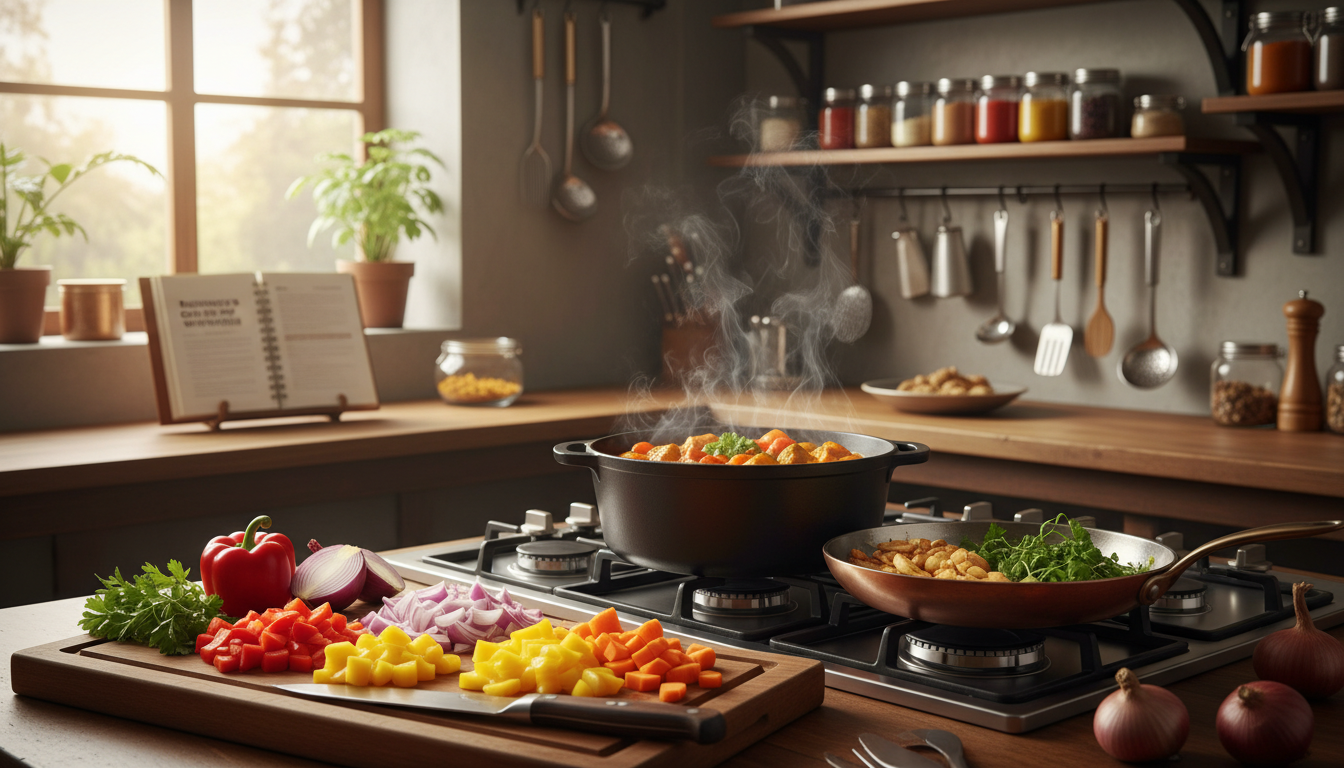
Essential Cooking Techniques Every Beginner Should Learn start with a handful of methods that work for almost any recipe. Most new cooks feel overwhelmed because recipes assume you already know the basics.
This guide covers the core techniques, tools, and habits that make home cooking simple and successful. You don’t need fancy equipment or years of training to cook delicious meals at home.
TL;DR
- You only need four basic tools: a sharp knife, cutting board, heavy skillet, and medium saucepan.
- Sauteing and roasting at 400-425°F handle most weeknight cooking needs.
- Prepping all ingredients before heating the pan prevents mistakes and reduces stress.
- Salt, acid, fat, and heat are the four elements that make food taste good.
Essential Cooking Techniques Every Beginner Should Learn
Start with these four fundamental methods that appear in countless recipes. Master these and you can cook most dishes confidently.
Sauteing – cooking food quickly in a hot pan with a small amount of fat. This technique works for vegetables, meat, and building flavor bases for sauces.
Roasting – cooking food in a hot oven using dry heat. Perfect for vegetables, chicken, and larger cuts of meat that need gentle, even cooking.
Simmering – cooking liquids at just below boiling point where small bubbles break the surface. Essential for soups, sauces, and tender braised dishes.
Seasoning – adding salt, acid, herbs, and spices to enhance natural flavors. This skill transforms bland food into something delicious.
The Four Tools You Actually Need
Ignore the gadget marketing and focus on these essentials. Quality matters more than quantity when building your kitchen.
- 8-inch chef’s knife – handles chopping, slicing, mincing, and crushing garlic with proper technique.
- Large cutting board – wood or bamboo protects your knife edge and provides stable workspace.
- Heavy-bottomed skillet – distributes heat evenly and prevents hot spots that burn food.
- 3-quart saucepan – perfect size for soups, pasta water, and cooking grains like rice.
These four tools handle 90% of home cooking tasks. Add specialty items only after you master the basics.
Heat Control Makes the Difference
Understanding how heat affects food separates good cooks from frustrated beginners. Different foods need different heat levels to cook properly.
| Heat Level | Best For | Visual Cues |
|---|---|---|
| High heat | Searing meat, stir-frying | Oil shimmers and moves easily |
| Medium-high | Sauteing vegetables, browning onions | Gentle sizzle when food hits pan |
| Medium | Cooking eggs, making pancakes | Steady but not aggressive bubbling |
| Low | Melting butter, warming sauces | No visible bubbling or sizzling |
Start with lower heat than you think you need. You can always turn it up, but burned food is ruined food.
The Science of Flavor Building
Good cooking follows simple principles that work every time. Understanding these basics helps you cook without recipes.
Salt enhances natural flavors and should be added throughout cooking, not just at the end. Acid from lemon juice, vinegar, or tomatoes brightens heavy dishes and balances richness.
Fat carries flavor and creates satisfying mouthfeel through butter, olive oil, or rendered meat drippings. Heat transforms raw ingredients through caramelization, protein coagulation, and moisture evaporation.
Mise En Place – Your Secret Weapon
This French term means “everything in its place” and professional cooks swear by it.
- Read the entire recipe before starting anything.
- Measure and prep all ingredients into small bowls first.
- Set out every tool you need within arm’s reach.
- Clean as you go to keep workspace organized.
Mastering Basic Knife Skills
Proper knife technique makes cooking faster, safer, and more enjoyable. Most home cooks use knives incorrectly and struggle as a result.
Hold the knife with your dominant hand using a firm grip on the handle. Your other hand guides the food with fingertips curved under, knuckles forward to protect fingers.
- Keep the knife tip on the cutting board and rock the blade down through food.
- Use the full length of the blade, not just the tip or heel.
- Let the knife do the work – don’t force or saw through ingredients.
- Keep your knife sharp with regular honing and occasional professional sharpening.
Practice these motions with soft vegetables like onions and mushrooms before moving to harder items. Speed comes naturally with proper technique.
Building Confidence Through Simple Recipes
Start with forgiving dishes that taste good even with small mistakes. Simple pasta recipes teach timing and seasoning without complex techniques.
Roasted vegetables develop deep flavors with minimal effort – just toss with olive oil, salt, and roast at 425°F until caramelized. Eggs teach heat control and timing through scrambling, frying, or making omelets.
Soups are nearly impossible to ruin and teach you how flavors develop over time. One-pot meals simplify cleanup while building your understanding of how ingredients work together.
Common Beginner Mistakes to Avoid
These errors trip up new cooks but are easily prevented with awareness. Learning what not to do saves time and ingredients.
Overcrowding the pan – too much food steams instead of browning properly. Cook in batches for better results.
Not preheating – cold pans stick and cook unevenly. Always heat your cookware before adding oil or food.
Moving food too much – let proteins develop a crust before flipping. Vegetables caramelize better when left alone.
Underseasoning – taste as you cook and adjust salt, acid, and spices throughout the process.
According to the USDA FoodData Central, home-cooked meals contain significantly less sodium and unhealthy fats than restaurant food, making these skills worth developing.
Articles You May Like
- What essential kitchen tools do I need for quick and simple cooking? – Learn about the must-have equipment that complements these cooking techniques.
- How to Stock a Pantry for Easy Everyday Meals – Build a foundation of ingredients that support all the techniques covered here.
- How can I avoid burning garlic when cooking? – Master this common cooking challenge that trips up many beginners.
- What should I cook when I’m tired and hungry? – Apply your new techniques to simple, satisfying meals for busy weeknights.
Frequently Asked Questions
Do I need expensive equipment to start cooking at home?
No, you only need four basic tools: a sharp chef’s knife, cutting board, heavy skillet, and medium saucepan. Quality matters more than quantity when starting out.
How do I know when my pan is hot enough?
Add a drop of water to the pan – it should sizzle and evaporate immediately. Oil should shimmer and move easily when the pan reaches proper temperature.
Why does my food stick to the pan even with oil?
The pan isn’t hot enough or you’re moving the food too soon. Preheat properly and let proteins develop a crust before flipping.
How much salt should I use when cooking?
Start with less than you think and taste frequently. Add salt throughout cooking, not just at the end, to build layers of flavor.
What’s the best way to practice knife skills safely?
Start with soft vegetables like onions and mushrooms, keep fingertips curved under, and let the knife tip stay on the cutting board. Speed develops naturally with proper technique.
Can I cook without following recipes exactly?
Yes, once you understand basic techniques and flavor principles. Start with simple, forgiving dishes and adjust seasonings to your taste.
Final Thoughts
Essential cooking techniques every beginner should learn are skills that improve every meal you make at home. Start with one method this week and practice until it becomes natural.
Focus on understanding heat, seasoning, and timing rather than memorizing complicated recipes. These fundamentals work in countless dishes and build confidence in the kitchen.

With over a decade of experience turning everyday ingredients into reliable, crowd-pleasing meals, Ryan knows firsthand the frustration of wasting time and effort in the kitchen. He specializes in clear, no-fuss guidance—breaking down techniques, time-saving tips, and smart shortcuts so that even complete beginners feel empowered and confident.
Subscribe to Our Newsletter